The Meaning of Pain
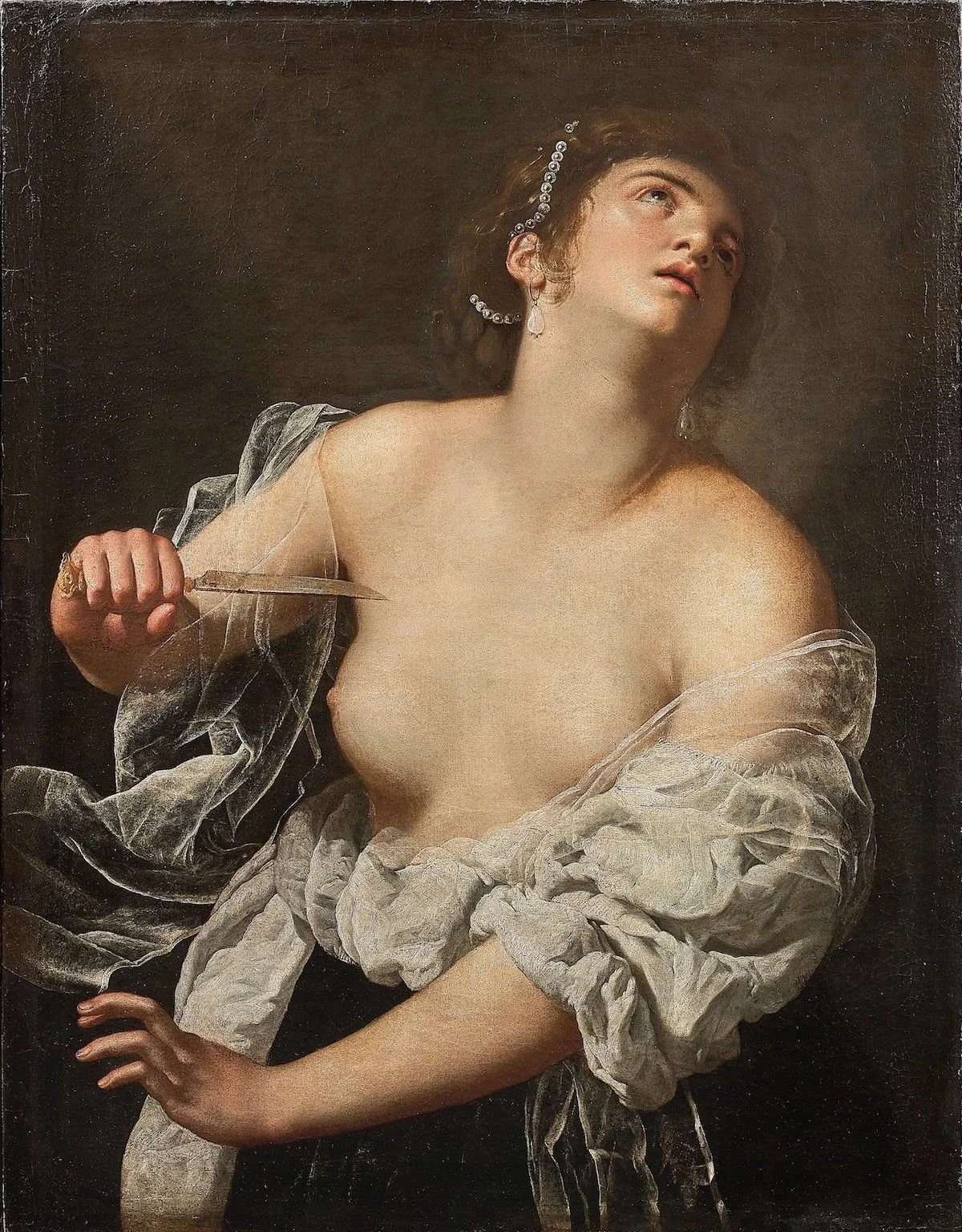
"Lucretia", Artemisia Gentileschi (1593 - 1656), Italian
“If there is a meaning in life at all, then there must be a meaning in suffering. Suffering is an ineradicable part of life, even as fate and death. Without suffering and death, human life cannot be complete”
The problem of human suffering has intrigued many philosophers, authors, religious and spiritual teachers. Why do pain and suffering exist? What, if any, purpose do they serve?
Human life, in many ways, is a struggle. Our modern inventions, often motivated by the idea that it is morally correct and good to increase comfort and minimise discomfort has given us a chance to distance from the immediate experience of, at least, the physical discomfort. We have the painkillers and heaters that turn our rooms warm in matter of minutes. The comforts made us fear suffering but they also made us crave the transformative heat of pain thus we develop elaborate stories about our traumas and emotional history, hoping for the pain to ennoble us or give us uniqueness.
The philosophies and beliefs that included the belief in the sacred or even those who believed simply in the evolution of time or spirit in the phenomenological context, would be able to provide some kind of meaning or an answer to the question. However, when the generally accepted viewpoint is entirely secular, the answer is more difficult to find. Pain then becomes unbearable because there is no purpose and meaning behind it. And perhaps human being is such that he can endure anything but the meaninglessness of his efforts, his sweat and his blood.
The False Promise of Happiness
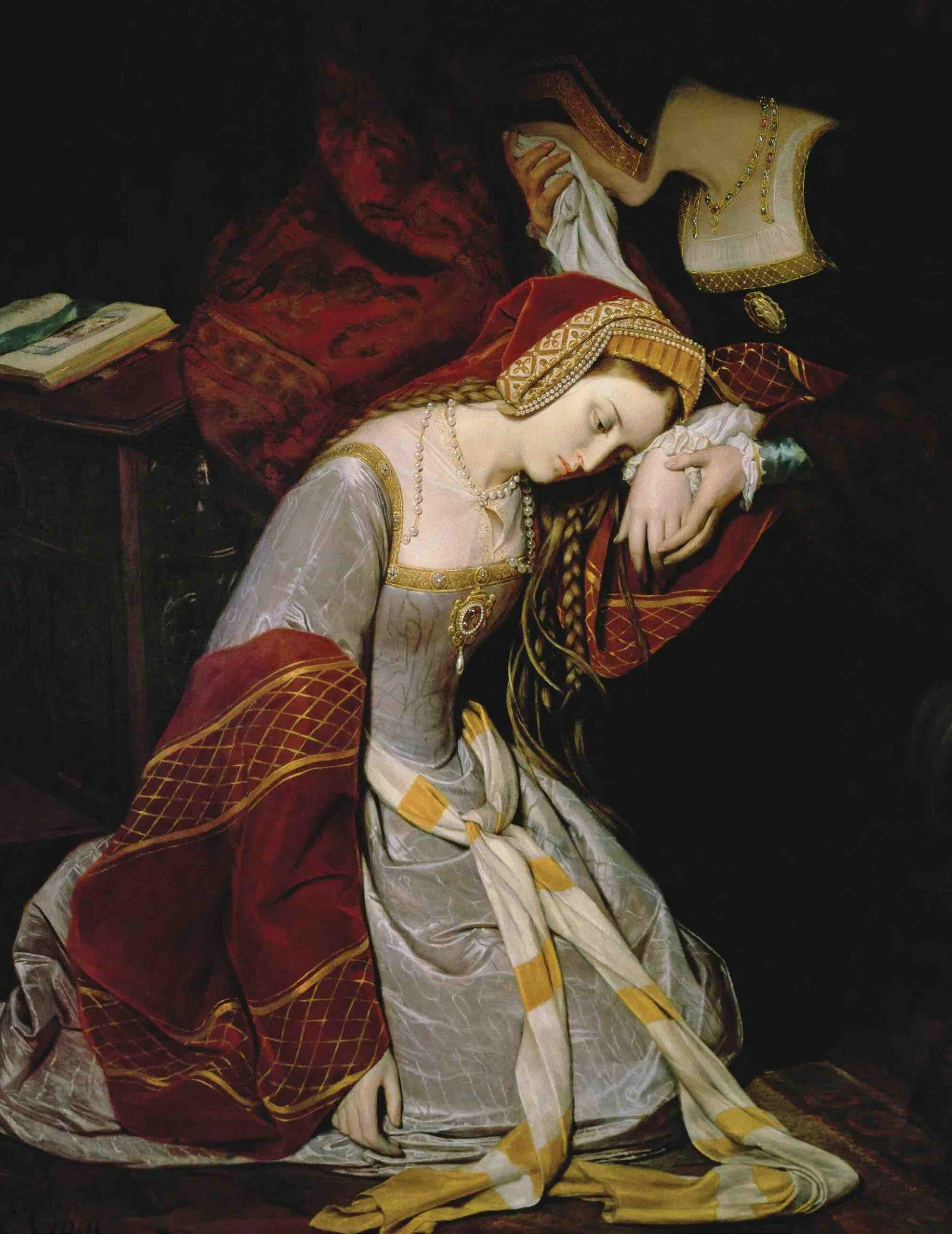
"Anne Boylen in the Tower", Édouard Cibot (1799 - 1877), French
The False Promise of Happiness
“What disturbs and depresses young people is the hunt for happiness on the firm assumption that it must be met with in life. From this arises constantly deluded hope and so also dissatisfaction. Deceptive images of a vague happiness hover before us in our dreams, and we search in vain for their original. Much would have been gained if, through timely advice and instruction, young people could have had eradicated from their minds the erroneous notion that the world has a great deal to offer them.”
— Arthur Schopenhauer
When speaking happiness as a pursuit, it is important to notice that it has ancient roots. Epicureans believed that the happiness was the absence of pain, the Utilitarian ethicists and philosophers such as Mill uttered similar ideas — happiness was pleasure and absence of pain and that it was a worthy pursuit of human life. Utilitarians though, wrapped their ideas of happiness within a greater ethical and philosophical context and it was slightly more complex than simple pleasure seeking. For Aristotle and Plato, happiness was a slightly different concept. For Aristotle, happiness depends on cultivation of virtues, for Plato happiness is found in the pursuit of the rational self and its victory over appetites, cultivation of cardinal virtues and also social service.
Happiness is often directly or indirectly taken as the ultimate goal of our modern pursuits. Your education, your job, your spouse and everything else should be picked on the basis of how happy they make you. Happiness is then seen as some final destination of life. To live happily, to be happy is the very purpose of life and what is the point of life if its very purpose is lacking? — a person may think to themselves. Perhaps the word they are looking for, or the feeling they are looking for is not happiness but rather contentment — the state of deep satisfaction, of realisation that even if life has had its sorrows, some big and some small, that you are still content, grateful and proud of the life you lived. Few things hurt us as our own expectations and few things hurt as much as the promise of happiness that was left unfulfilled.
Rather than being seen as a destination, happiness is to be seen as an ingredient of life — something that comes and goes, just like the sorrows of life. It may reach us, to one degree or another but it is never promised to us. Both however, can add to the beauty of life and can be part of our contentment.
Struggle, Pain & Hero
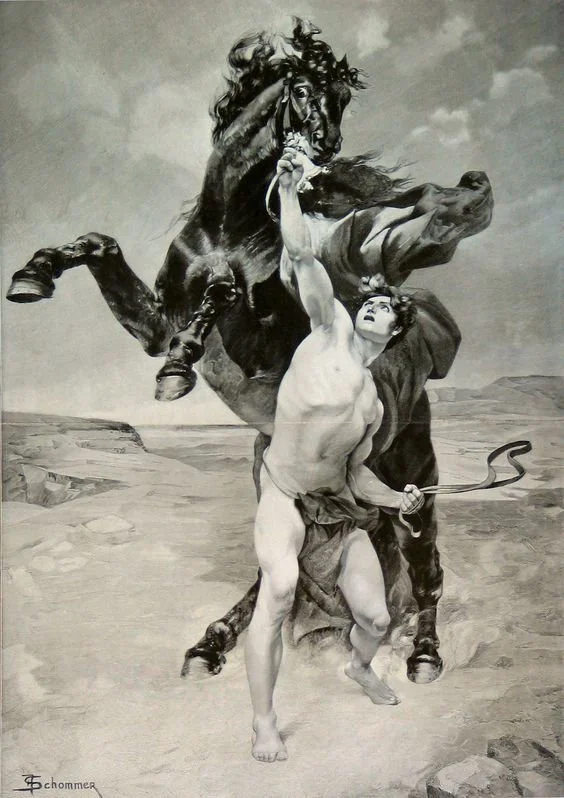
"Alexander taming Bucephalus", François Schommer (1850 - 1935), French
"Modern civilized man cannot endure cruelty, pain and suffering and is more merciful than men of the past, but this is not because he is morally and spiritually superior. He fears pain and suffering more than they did; because he is more effeminate, less firm, patient and courageous than they; in other words, he is spiritually less strong."
— Nicolas Berdayev
There are very few hero's journey stories, be they ancient or modern, in which the hero does not face certain struggles. For who would want to watch a hero who does not conquer struggle after struggle, hardship after hardship? Hero is not only physically strong, he is spiritually and mentally strong as well — the hardships and struggles he faces are not only the point of meeting with the external enemies, they are also meetings with the enemies within. In that journey, hero does not only conquer the enemy, he also conquers himself.
It could then be said, that the struggle and pain are the very things that make hero a hero. Without them, he would not provoke the neither admiration nor inspiration. Hero himself never realises his strength until the world offers a great resistance against him.
The role or the meaning of pain and struggle is the role of the smith, who hammering and forging the randomly shaped metal, gives it a clear form. The pain and struggle serve as the transformational power. "Fortune and love favour the brave", said Ovid once. The gods are ready to offer their gifts to those who looking hadship and struggle in the face, do not turn away, do not admit defeat but rather face it. They are willing to endure the pain necessary for the apotheosis.
Pain and suffering offer each one of us an opportunity to conquer something, to be heroes of our own storylines, to rise above the defeat, to recognise the hands of gods even when they beat us like the smith beats his metal, to emerge as a victor and upon leaving the dark abyss of pain and suffering that has consumed our existence, to see Nike and her glorious wings of victory.
