The Primordiality of Poetry
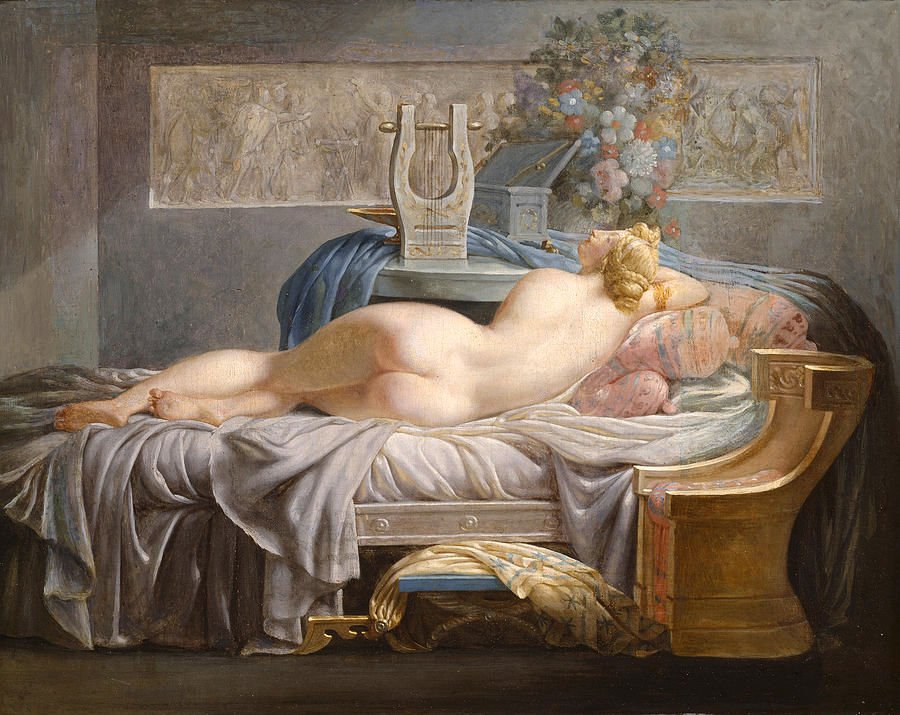
"Sappho", Jean Baptiste Regnault (1754 - 1829), French
“The poet only asks to get his head into heavens. It is the logician who seeks to get the heaens into his head. And it is his head that splits.”
Out of all literary genres, poetry is probably the one to suffer the biggest loss in its popularity — there are very few people who say they read poetry and even less are those who buy books of poetry. On the other hand, poetry or at least what attempts to be poetry is spread via social media hardly gives any respect to the poetic arts. The popular, Instagram poetry consists of sentences broken into separate — this kind of popular poetry has not only the lost the poetic form, metre and rhythm, for free style poetry can be of outstanding quality, but it also has lost one of the main characteristics of a poem and that is the poetic language.
The poetic language differs from the daily language with its intricate network of figures of speech are what transform daily, mundane, sad, shameful and heartbreaking into beautiful and redemptive. Losing poetry, humanity is losing one of its earliest companions.
The Dawn of Humanity
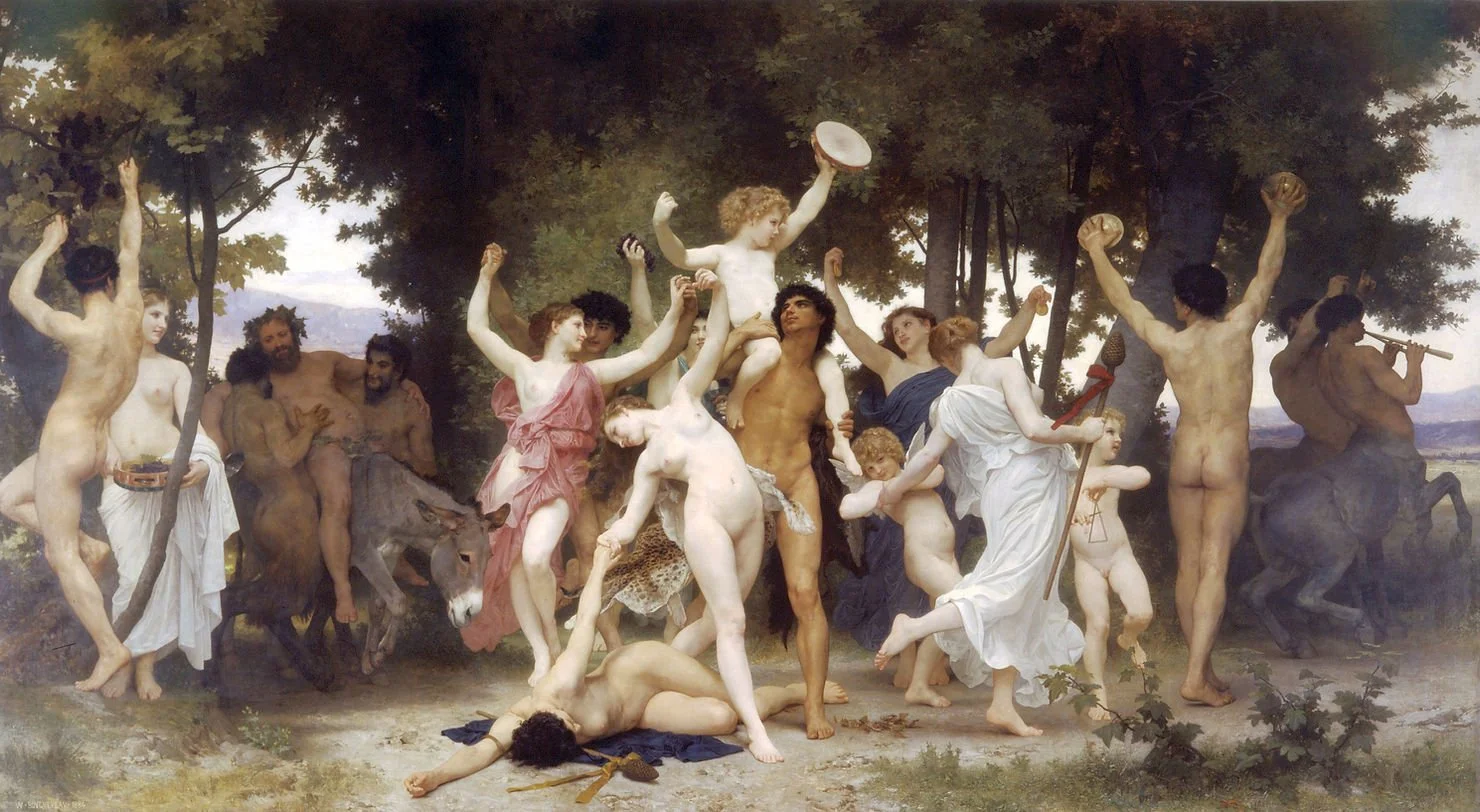
"The Youth of Bacchus", William-Adolphe Bouguereau (1825 - 1905), French
"Poetry always remembers that it was an oral art before it was written art. It remembers that it first was a song."
- "The Divine Comedy", Jorge Luis Borges
If one is to take any literary theory textbook and course or simply take a look into the history of literature, one could easily find that poetry was the first of literary forms. It took a very long time, centuries for a novel to appear and to gain primacy in humanity's art of words. The earliest poems, were, like Borges suggests, primarily oral. They were most often hymns that accompanied rituals and celebrations. One can find these early forms probably in any civilisation and in any folk tradition that existed or still exists.
In Ancient Greece, drama and poetry evolved from dithyramb, an ancient song sung in honour of the god Dionysius (Bacchus for Romans). Dionysius was the god of fertility and wine, closely related to agricultural cults and celebrations. The Dionysian rite also included orgia — a ceremony in which devotees wore masks and performed animal sacrifice with an intent to break down the barriers between the divinity and themselves through the mystical ecstasy. These celebrations were later banned. It is widely accepted among anthropologists, sociologists and historians that the earliest agricultural communities had close relationship with Earth and that ecstatic fertility celebrations were a part of the religious practice tied to the fecundity of Nature.
No celebration or devotion could ever be complete without a song. In the moment of ecstasy, verses can come out on their own, sent down by a spirit or jinn. Rhythm and poetry follow humanity from its most primordial roots and into its highest expressions. Poetic art is thus a principal part of many peoples' earliest heritage — Homer is a jewel of Greece, Ovid and Virgil is pride of Rome, Beowulf of the Anglo-Saxons, Kalevala is unforgettable in the memory of Finnic peoples, Poetic Edda is where the Icelandic and other Nordic people find their cosmological root; we also recall Epic of Gilgamesh, Popol Vuh, Ramayana, Shijing, and many more epics and ballads. These all eventually became part of the universal human heritage, recognised for their value in the entire world. Poetry is at once, humanity’s most primordial (even “primitive”) and highest expression.
Poetry was there at our first attempts to gather in celebration of the Divine. It was there to tell the first stories. From our poetic expressions came the drama, from drama, our beloved novels and cinema.
The Apotheosis of Humanity
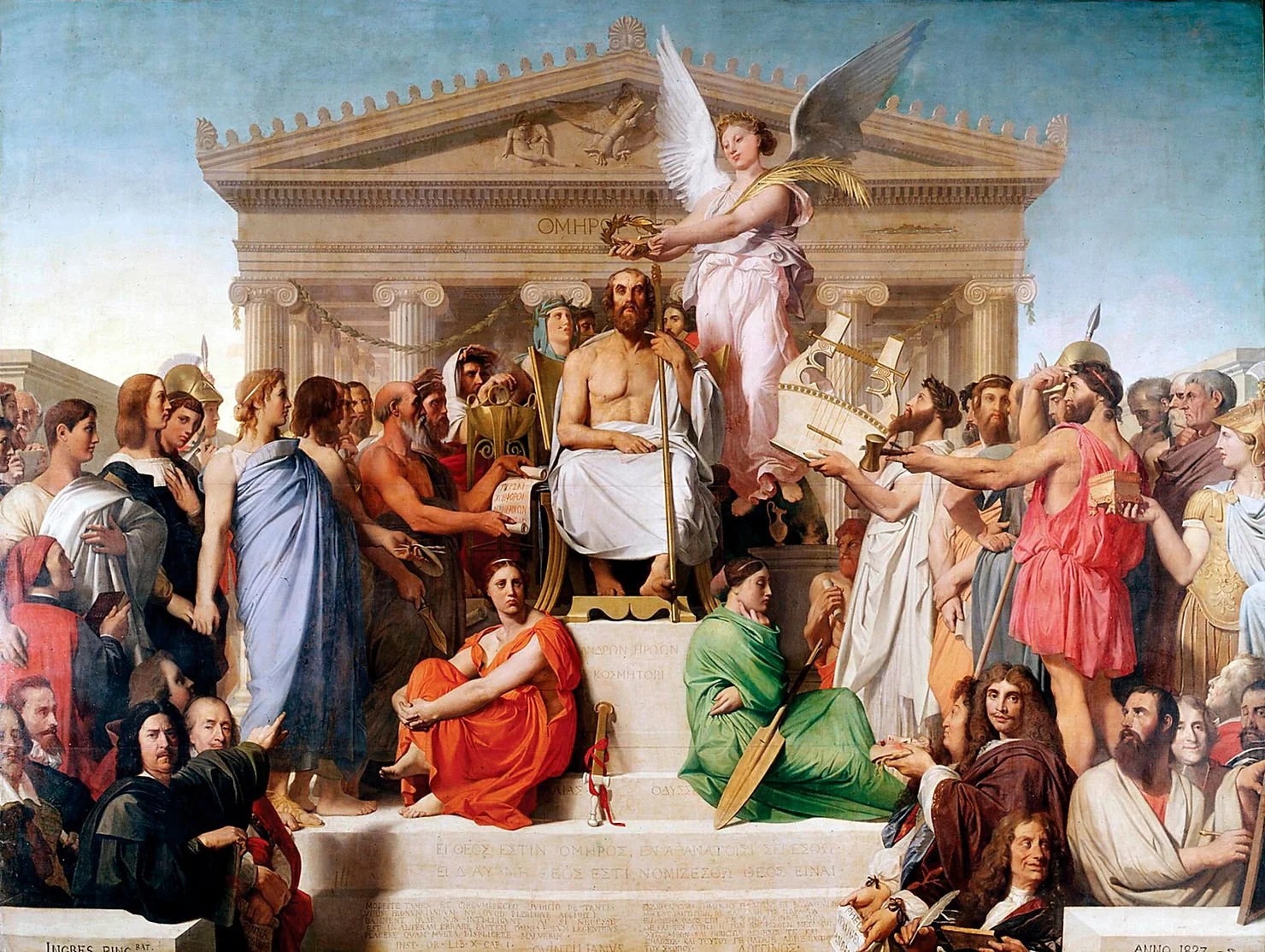
"Apotheosis of Homer", Jean Auguste Dominique Ingres (1780 - 1867), French
As the humanity moved from its primarily agricultural to its more complex, stratified urban dwellings and with development of institutions and philosophy, poetry from the realm of Dionysius slowly came under the patronage of Apollo. Apollo is a Greek and Roman god of sun, light, knowledge, healing (and protection from evil), poetry, song, dance and many other things. It can be said that, as opposed to primordial innocence of Dionysius, Apollo represents the awareness, the conscious and controlled creativity and knowledge. Apollo is the light that is shed over the chthonic dark of the Dionysus. With him, poetry moved from its roots and its oral form and slowly started getting an artistic, intentional form. Mathematics became part of poetry and music. Rhythm and metre were consciously developed. Poetry became an art that not just anyone who dances could take part in but had to be studied as well. Of course, these two are not separate, in fact, they nourish one another — the feeling and the ecstasy of life is still inside a poet but the poet now has conscious awareness and ability to penetrate into depths, bringing its most beautiful jewels to shine under the Sun.
Poetry written even with conscious awareness, still maintained its sacred and devotional spirit. Almost every major religious text of almost any religion is written in poetic form — even if is narrative it is poetic narrative or narrative in verse. We may look at the poetic beauty of Psalms, or at the Vedas, of the Bhagavad Gita, or Upanishads and Puranas, of Orphic Hymns and Homeric Hymns, of Dante's "Divine Comedy". We may admire the beloved Muslim Sufi poets such as Rumi, Hafiz or Rudaki and others who often saw the Qur'an as the poem they could never "outdo". Poetic form was the preferred form of the sacred and devotional texts because the poetic language of which I spoke in the beginning, offers the poet a powerful means of expression through metaphors and other figures of speech. The truth has to be veiled (in metaphor, allegory, paradox) in order to be experienced and received. The poet creates the entire microcosm within a poem and through it, gives cosmic meaning to the human experience. The poet "gets his head in the heavens" and translates into human language that which he hears. The poet, ideally, is a messenger or a prophet.
"Apotheosis" means to elevate something or someone to a divine status. In more secular terms, it means to reach a pinnacle of something. Poetry unites the various, sometimes polarised parts of humanity — it unites the structure with ecstasy, the objective and clear with the subjective and paradoxical. Poetry, after it unites the two, demands beauty of language, of expression that differs from the simple daily expression. It demands subtlety and awareness that would escape us if we were to remain crude. Poetry is thus that domain in which the human spirit soars and moves across experiences and realities, the domain in which it is in direct communion with the ecstasy of Divine and Creation.
Enjoying Poetry
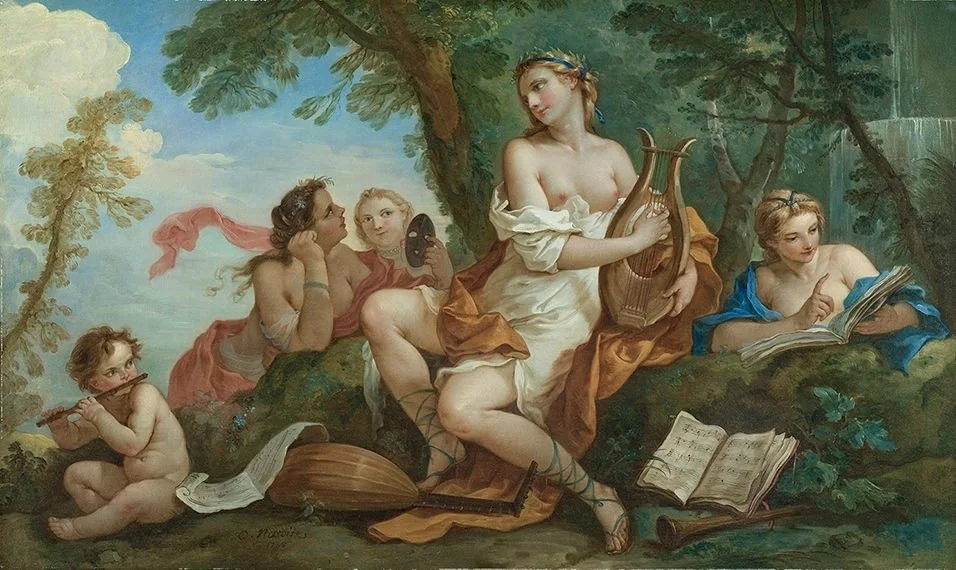
"Erato Serenading Thalia, Euterpe, and Melpomene", Charles Joseph Natoire (1700 - 1777), French
If you do not have a habit of reading poetry, even if you wish to read it, you may feel it is too heavy and dense. Or that its paradoxical, metaphoric language confuses you. You may also not know where to begin. It is something I often hear people say, so I want to finish this article with a gentle advice for those who feel called to start reading poetry: What I would suggest is to slowly learn to take time, pay attention and with tranquility do something that serves no "productive" purpose. To truly read a poem, we also have to put away our analytical minds that only want for the things to "make sense" but rather allow other parts of our being to dominate the interaction. To read a poem is to be receptive, to communicate with the deepest corners of the poet and our own selves. Once we learn this, very soon we discover we have favourites. Once we have favourites, we return to them, rarely do we return to our favourite theoretical book or even a novel, but our favourite poems is something that we will continually return to — and each time you read them, they reveal more. A poem is an infinite depth. As is poetic life (experience itself seen as poetry) — but of that, another time.
