The Beauty of Grotesque and Ugly
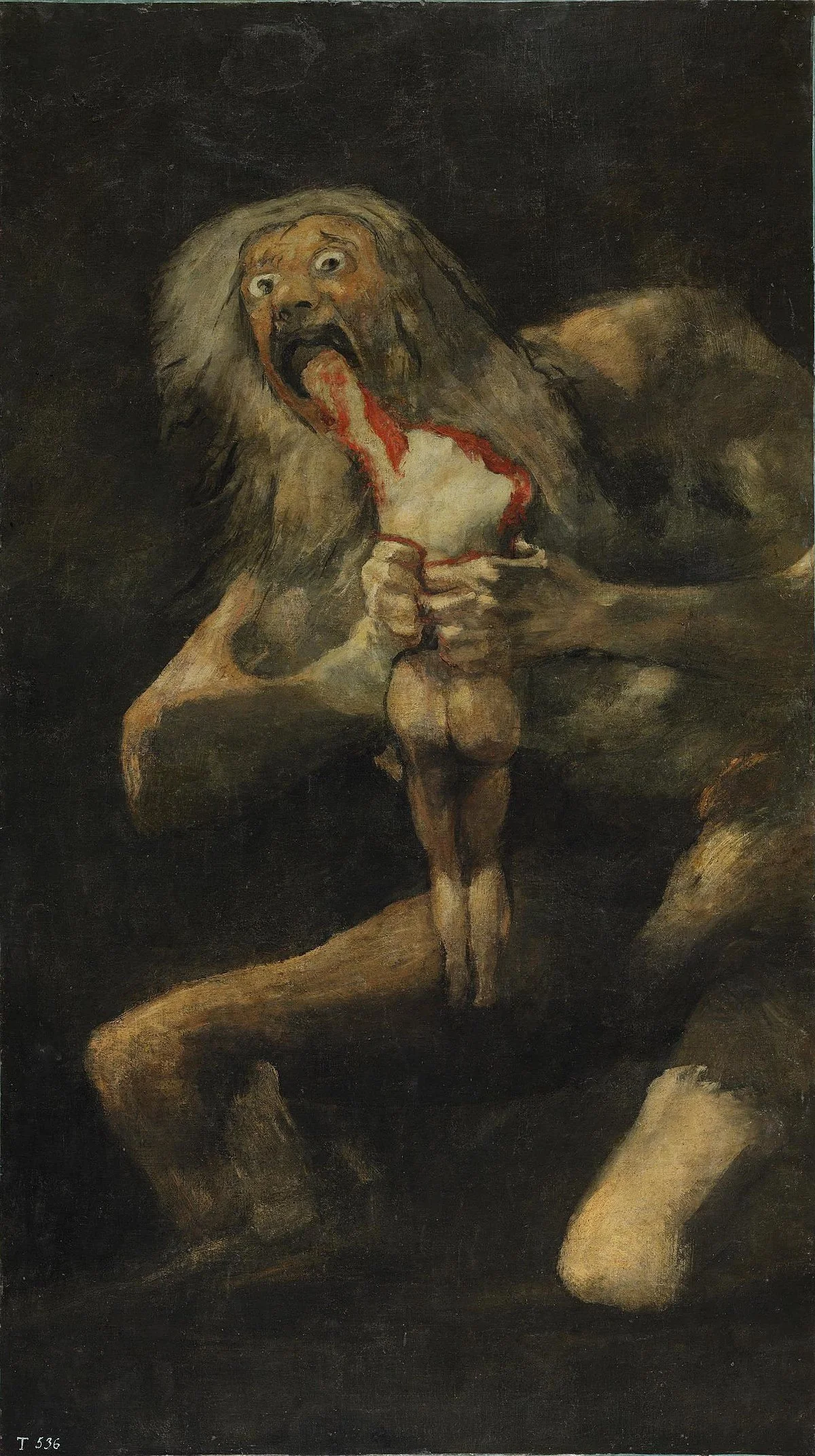
"Saturn Devouring His Son", Francisco Goya (1746 - 1828), Spanish
"A natural beauty is a beautiful thing, artistic beauty is a beautiful representation of a thing. In order to appraise a beauty of nature, as such, I do not require any previous concept of what sort of thing the object is meant to be i.e, I do not have to know its material finality (its end), for it is the form itself - and not knowledge of the end - that pleases us on its own account. (...) It is true, especially when appraising animate objects of nature e.g., men or horses, that objective finality is commonly taken into account in order to make a judgment of their beauty, but such judgments are no longer purely aesthetic, i.e. mere judgments of taste. (...) In such a case when we say for example: "There is a beautiful woman", what we are actually thinking is that nature has made her in such a way that her form is an excellent portrayal of the ends present in the female figure. For we must look beyond mere form to a concept if we are to enable the object to be thought of in such a way through a logically conditioned aesthetic judgment. Fine art reveals its superiority in the beautiful descriptions it gives of things that in nature would be ugly or unpleasant. Even though they are evils, the Furies, diseases, wars, devastation, and so on, can be very beautifully described, and even represented in pictures. Only one kind of ugliness can be represented in conformity with nature without destroying all aesthetic pleasure, and therefore artistic beauty: namely that which arouses disgust. For, in this singular sensation that depends solely on the imagination, the object is represented as if - so to speak - our enjoyment of it were obligatory, while we reject it violently; thus, as far as our sensation is concerned, the artificial representation of the object may no longer be distinguished from the nature of the object itself, and hence it cannot possibly be considered beautiful."
— "Critique of Judgement", Immanuel Kant
Grotesque and horror have always intrigued humans. Perhaps many of us have experienced the moment in which we were watching a scene in a horror film or were exposed to an image that involves organs, blood, and gore. Perhaps we even wanted to look away, but we continued to watch. We might find ourselves in awe of, magnetised by imagery of deformity and excess. The deformed, the hideous, the ugly frightens but it also attracts.
Art finds a beautiful and aesthetic representation of the ugly and grotesque. Devil, hell, wars, death, murder are often portrayed beautifully, sometimes even with a degree of romanticism. The beauty here does not come from harmony but from unfiltered growth and monstrous excess that is its own form of coherence and metaphysical truth. Truth is always beautiful.
In the Western tradition suffering became a major theme under Christian and later Romantic influences. In his "Aesthetics", Hegel reflects on this: "The true critical point in this life of God is the one in which he abandons his individual existence as a man, the Passion, suffering on the cross, the Calvary of the spirit, the torments of death. (...) On the one hand, the earthly body and the fragility of human nature are generally elevated and honoured for the fact that it is God himself that appears in them: on the other hand, however, it is precisely this humanity and corporeity that is poisted as a negative and appears through suffering, while in the classical ideal it loses none of its undisturbed harmony with the spiritual and the substantial. (...) The enemies, insofar as they are opposed to God, condemn, mock, martyr and crucify him, are represented as wicked inside, and the representation of inner wickedness and hostility towards God brings in its train outer ugliness, coarseness, barbarity, rage, and the deformation of the figure."
The image of the abused, defiled and deformed human body was often there to demonstrate that flesh is made to decay. At the same time, in the images of Jesus Christ or of tortured saints like Saint Bartholomew, the flesh becomes the instrument of liberation and salvation. Their abused, damaged, deformed bodies are reflections of Divine Grace and Light and therefore, beautiful.
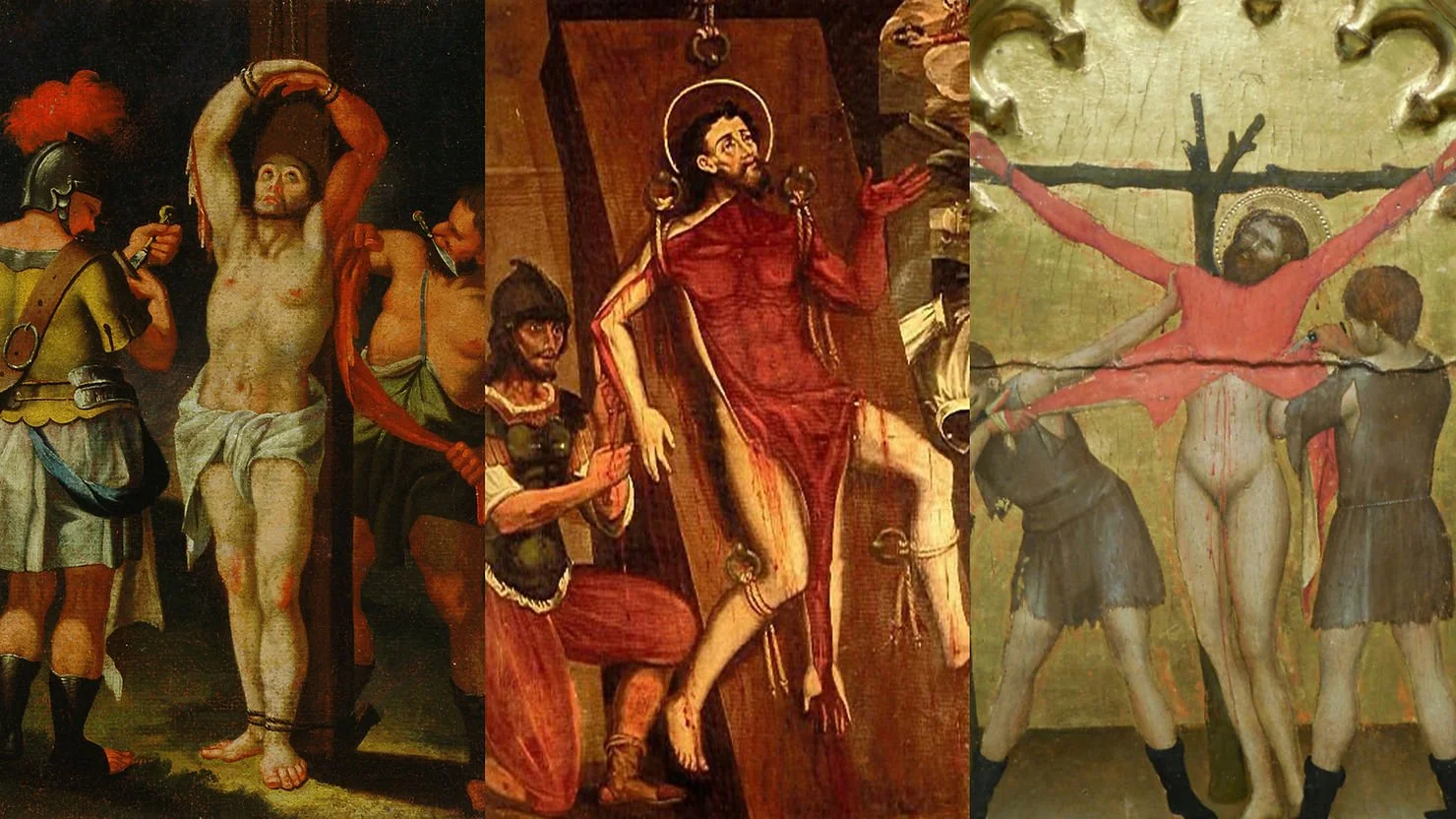
Scenes of St. Bartholomew's Skinning Depicted in Classical Art
The Grotesque as the Marvellous
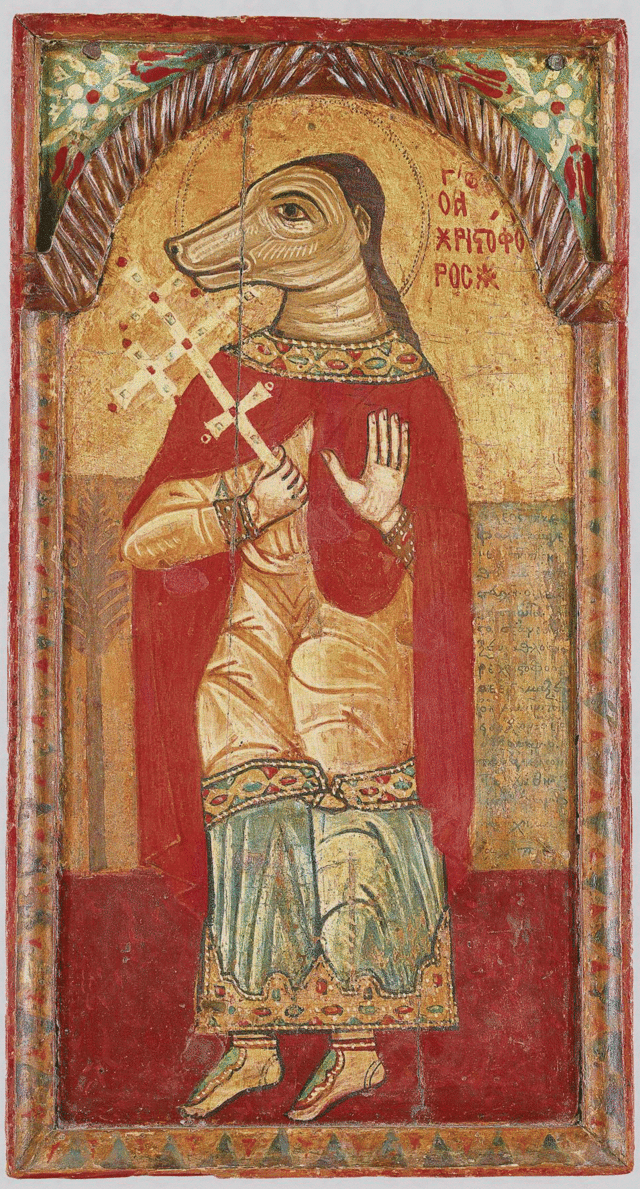
Saint Christopher as Cynocephaly
After the conquests of Alexander the Great, the Ancient Greeks were introduced to many cultures that were previously unknown to them. It is in the nature of human mind to use imagination there where it does not have enough tangible information and data. The fruit of that human tendency are the many stories and tales developed about the new and foreign lands. All kinds of beasts, hideous creatures and monsters lived there. This has continued into Middle Ages, during which people were fascinated by the Marvellous — the earlier form of what was to become the Exotic. The famous travellers decided to travel partly because they were consumed by the idea of Marvellous. They travelled captivated by the stories these strange humans and beasts. Marco Polo, for example, claimed that rhinoceros were the legendary unicorns.
Many hideous creatures are named in these medieval texts. For example Astomori, people who did not have mouth and fed on smells or Sciapods, a race of humans who would hide from sunshine by lying down supine in the shadow of their own feet. Among these creatures were also cynocephali—humans with a dog's head— who were believed to live in India, Persia, Egypt and other places. St. Augustine mentions these people in his "The City of God" and debates whether they were really humans. It might be understood that they were symbolic representation of a human who was driven by instinctual impulses, which the canine commonly represents.
Saint Christopher, a Christian saint is often depicted as coming from this hybrid dog-human race. He was described of an enormous size, with a head of a dog instead of a man. This was apparently a characteristic of the Marmaritae, a Berber tribe of Cyrenaica. The famous traveller Ibn Battuta also described such a race who live on an island between India and Sumatra — most likely they were Mentawai people, who practiced teeth sharpening. There were many other myths and legends about the cynocephali, but the purpose of mentioning them here is to illustrate how the artistic depiction of the strange, and weird, was also tied to depiction of legendary, marvellous and exotic.
The Ugly & Grotesque As Divine Order
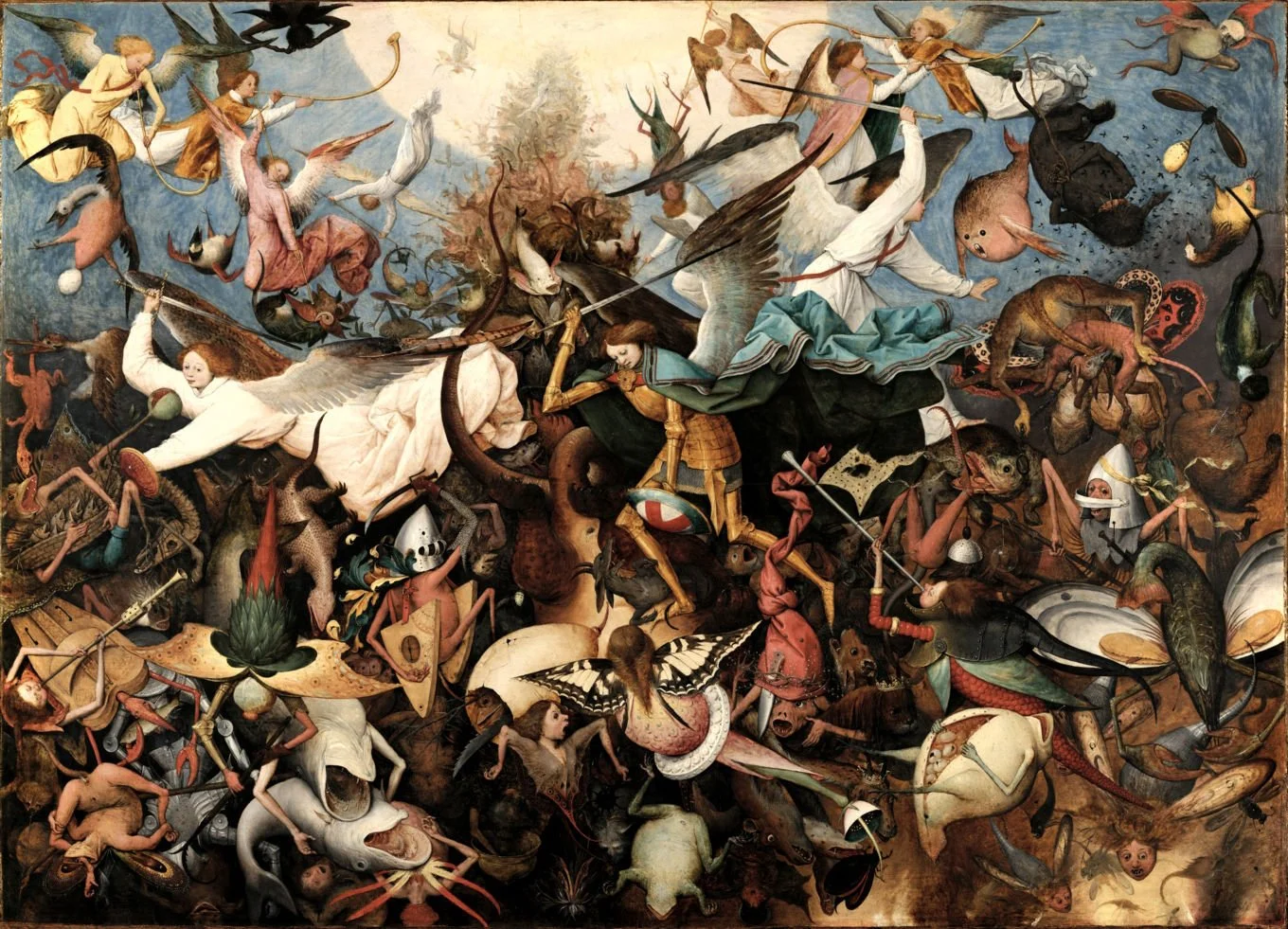
"The Fall of the Rebel Angels", Pieter Bruegel the Elder (1525 - 1569), Flemish
Existence of these hideous and evil creatures had to eventually be explained by the theology. The theologians of the time, such are Saint Victor or Saint Paul, began a great tradition of the universal symbolism. This tradition, relying on the Platonic and Neoplatonic ideas about ideal forms and Divine order believed that we see supernatural beings in allusive and symbolic form. By seeing things in this symbolic form, we come at the conclusion that everything in the world (every mineral, plant, animal or human) has a moral significance since it teaches us about vices and virtues. In case it does not have a moral significance, it has the allegorical — it symbolises the spiritual realm through that specific form. Everything in the world is a mirror that reflects life and death, future, present, and past. The monsters came to be seen as divine in one way, as their very existence was able to reflect Divine Light. From the Neoplatonic perspective it was exactly against their hideous and deformed form, even their evil that the beauty and the light of reason, as well as the one of virtue stood even more clear.
Monsters were a part of divine will, and therefore, a part of the nature. Many a time the depiction of monsters was complained against, but even the most rigorous of the people could not hide the fascination . The monsters were still in everything that humans created.
Ugliness and evil then became requirements for beauty, as Alexander of Hales says: "Evil as such is misshapen (...) Nevertheless, since from evil comes good, it is therefore well said that it contributes to good and hence it is said to be beautiful within the order of things. Thus, it is not called beautiful in an absolute sense, but beautiful within the order, in fact, it would be preferable to say: "the order itself is beautiful."
The world we live in, lacking a sacred or symbolic perspective, may fail to understand the subtle truths that hide behind the ugly, the monstrous and the grotesque. We may, however, notice that ugliness and even intentional distortion of form can become a form of protest or an expression of political perspectives that aim to annihilate norms and structures and expand beyond them. Our age is largely ideological and identitarian, therefore our eternal fascinations and truths will try to find their manifestation and expression there.
The grotesque and the ugly still spark our curiosity and inspire. We look at the chthonic dread of the deep sea, we imagine aliens as big headed, green humanoids which is not that different from medieval ideas of humans with dog heads. Horror, gore, crime and the lives of assassins still fascinate us. Excess is something we cannot possess. If we were asleep, it wakes us up. It stirs and disturbs, it makes us feel powerfully and strongly and we love strong and powerful emotions. Ugliness in its capacity to fascinate and inspire an awe, shares with beauty. And beauty, in her capacity to shock and destabilise through inspiring involuntarily devotion, binding us to herself even before we know she is there, is her own kind of horror.
